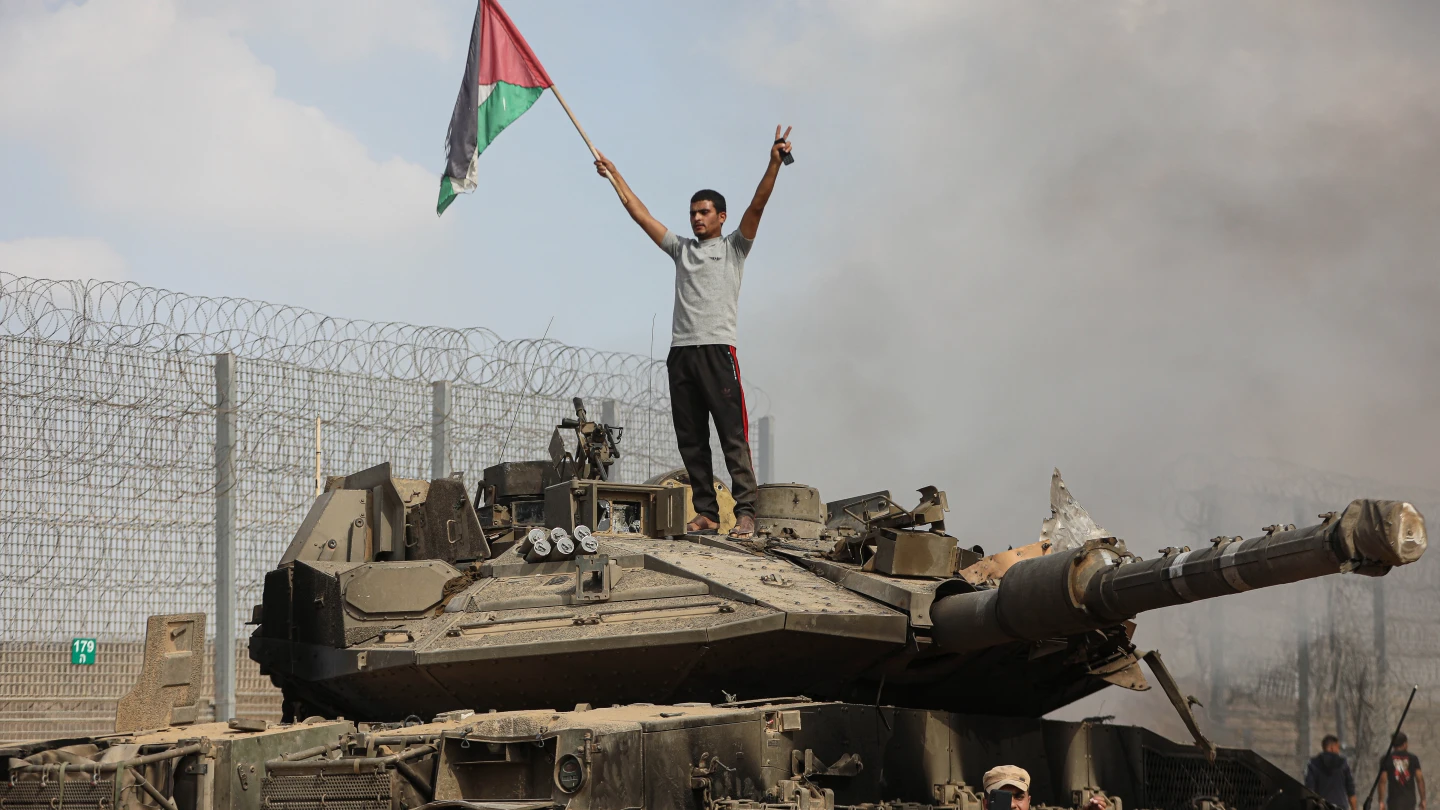
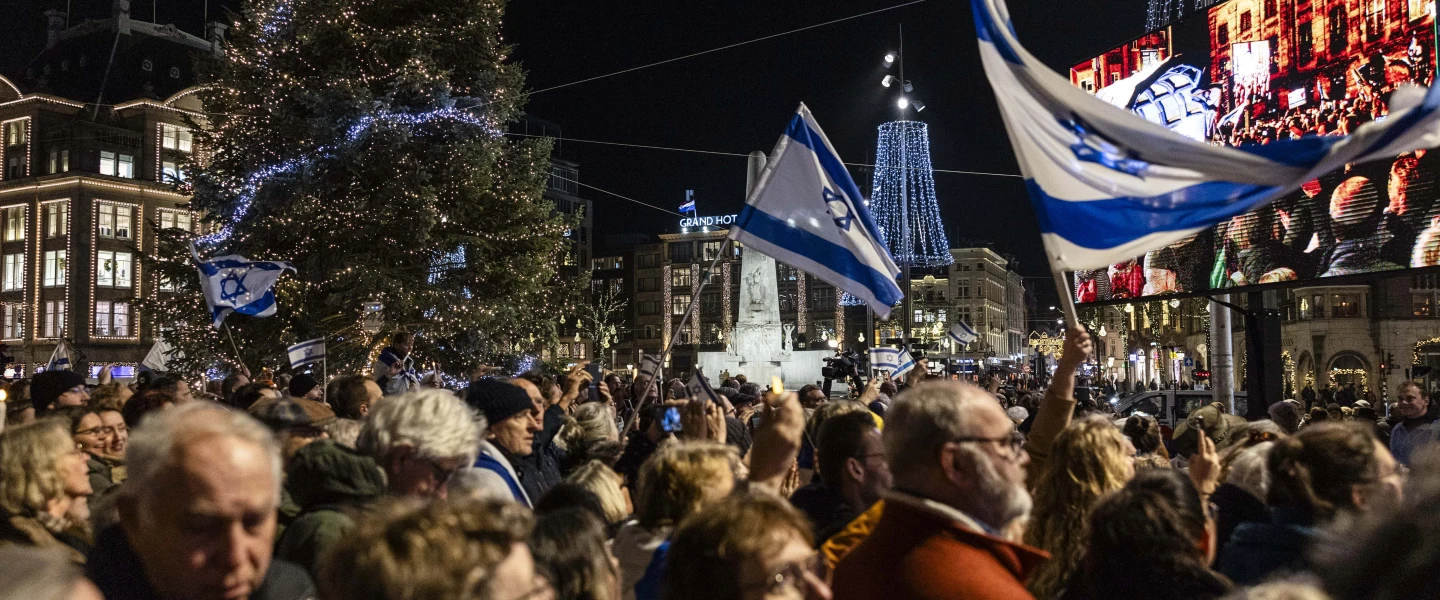
“It’s a day of mourning for all of us,” former hostage Luis Har told JNS ahead of Wednesday’s third anniversary of the Hamas-led massacre on Oct. 7, 2023.
“To be in captivity is hell. It’s terrible. This was the reality, and we need to deal with what was,” Har said. “They barely gave us the possibility to think. We were not our own masters.”
“But together with that, today I am telling my story and showing that I’m here, I’m alive—and it’s the most important thing in the world,” he said. “We are building, and they didn’t succeed in bringing us down.”

On Tuesday, Har flew to Guatemala to attend commemorative ceremonies and share his testimony, which he described as part of his healing process. But the anniversary also serves as a stark reminder of how completely his life changed on Oct. 7, when Palestinian terrorists abducted him and took him to the Gaza Strip.
“It’s sad that it happened; it’s something inside that we feel every time, even after three years,” Har told JNS.
On Oct. 6, Har slept at the Nir Yitzhak home of his girlfriend, Clara Marman. Around 6:30 the next morning, they heard rocket alert sirens and rushed to safety.
Clara’s brother Fernando, sister Gabriela, niece Mia and their dog, Bella, were also at the home when Hamas launched its invasion.
All five gathered in the safe room as terrorists began shooting through the door and eventually broke in. They pleaded for their lives before being driven out of the kibbutz in a white Toyota pickup truck and into Gaza.
Clara, Gabriela, Mia and Bella were released on the 53rd day of the war.
On Feb. 12, 2024, commandos from the Israeli Navy’s Shayetet 13 (“Flotilla 13") and the General Staff’s Mobility Unit 5515 rescued Har and Fernando from Rafah in the southern Strip, after 129 days. The operation, code-named “Golden Hand,” was conducted jointly with the Israeli Security Agency (Shin Bet).
Har described the moments of his rescue in video testimony, saying, “Someone pushed my head down, and said, ‘Luis, IDF. We’re coming to take you home.’”
שנתיים למבצע יד הזהב - תיעוד חדש מפעילות צה״ל במבצע
— צבא ההגנה לישראל (@idfonline) February 13, 2026
ב-12 בפברואר 2024 במבצע מיוחד של צה״ל ושב״כ, שייטת 13 ויחידת הניוד 5515 חילצו את פדויי השבי לואיס הר ופרננדו מרמן מהשבי ברצועת עזה לאחר 129 ימים בשבי.
כעת ניתן לחשוף תיעוד מיוחד ממצלמת הגוף של לוחמי צה״ל מרגעי הנסיעה לכיוון… pic.twitter.com/tXC81iLRIT
After his rescue, Har realized he needed to get to know himself all over again and rebuild his life from scratch because everything had changed.
“I think I became someone else. I was a kibbutznik in the south, an anonymous person with a family life, and suddenly I am known to the whole world and coping with the trauma with strength, faith and hope that I did not know I had before,” he told JNS.
“Today I accept myself with those new characteristics and this new life. And I keep sharing my story with the world. I keep describing how unique and amazing the Israeli people are. Captivity gave me the strength to get to know myself. After I returned, my friends told me they were sure I would come out of it because of my resilience. To them it was clear, even though to me it wasn’t.”
Since being freed, Har said he tries to focus on the positive, noting that he does not know how much time he has left and wants to use it to help others—including visiting wounded soldiers in hospitals, speaking with their mothers and volunteering to organize meals for troops.
But despite his efforts to move forward, Har said he does not consider himself to have moved beyond the trauma.
“It’s still not post-trauma. It’s trauma really and we need a lot of strength and to be ready when we feel the panic to get out of it,” he said.
“It happens all of a sudden. It can be the noise of a motorcycle or an airplane and the body shrinks. Suddenly we are overtaken by tension and stress. I say to myself, ‘Relax, you are here, you’re not there,’ and slowly I get out of it. It can be dormant for 20 years and something wakes it up. I am aware of that, so we need to cope. If I start crying, I cry; if I am unhappy, I’m unhappy, and then I look for solutions to get out of it, like spending time with my grandchildren.”
It’s been two years since Luis Har was heroically rescued by the IDF after 128 days in Hamas captivity.
— Embassy of Israel to the USA (@IsraelinUSA) February 13, 2026
He was taken from his home in Kibbutz Nir Yitzhak alongside his girlfriend and other family members - ripped away in an instant and held for months.
Luis’s story is one of… pic.twitter.com/pEMtLX0Oty
The effects of captivity are also physical. Har continues to experience severe pain in his legs and weakness on his left side after being immobilized for so long, and he remains in treatment.
Despite what he endured, Har said he does not harbor anger. Instead, he wants to prepare himself for the future.
“I appreciate the strength of the people that helped. I want to know what happened, not so much to know who’s responsible but to be ready for what may happen next. Look at what happened on the flydubai plane. The passengers knew what to do,” Har told JNS, in reference to the Sept. 30 terrorist attack aboard a flight bound for Tel Aviv.
“We need to know what to do in all scenarios. I’m not keeping hate inside. I want to understand,” he added.
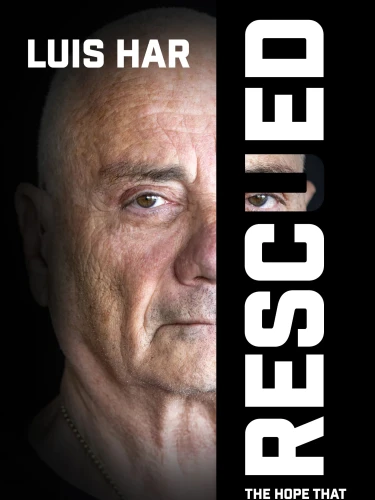
That desire to preserve what happened and ensure it is not forgotten is also behind Har’s recently published book, Rescued, which he said tells his story as he experienced it, in the most authentic way possible.
“This book is important because our brains have defense mechanisms that protect us. The brain pushes us to forget things that are too difficult to live with,” Har said. “Once it is written down, it becomes evidence.”